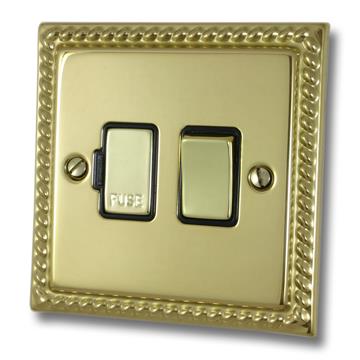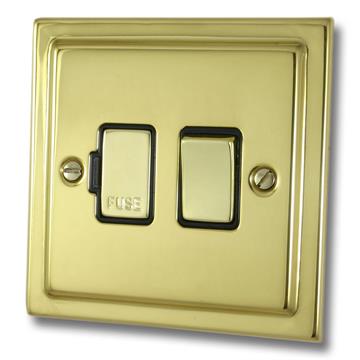
What Is a Fused Spur?
A fused spur is a wall-mounted switch that provides a dedicated, fused connection for a fixed appliance — one that's wired in permanently rather than plugged into a standard socket. They're commonly used for extractor fans, boilers, and other appliances that don't use a standard 13-amp plug.
Why does a fused spur need its own fuse?
A standard UK socket is protected by the fuse inside the plug itself — normally 3A or 13A, depending on the appliance. A fused spur is used precisely because there's no plug, so the fuse has to live somewhere else: inside the spur unit. This lets you correctly protect an appliance that draws less current than the ring main it's connected to, without relying on a plug that doesn't exist in that installation.
What's the difference between a switched and unswitched fused spur?
A switched fused spur includes an on/off switch, letting you isolate the appliance without turning it off at another point in the circuit. An unswitched fused spur has no switch — the appliance is either permanently live, or controlled elsewhere, such as a separate isolator switch. Whether you need switched or unswitched depends on the appliance and how it needs to be controlled; a qualified electrician can confirm which is appropriate for your installation.
What is a flex outlet, and how does it differ from a fused spur?
A flex outlet plate is similar to a fused spur but is designed for an appliance connected by a flexible cable (flex) rather than fixed wiring — the flex passes through the plate to the appliance. Some fused spur plates combine both functions, providing a fuse and a flex outlet in one unit, commonly used for extractor fans and similar appliances.
What appliances typically use a fused spur?
Fused spurs are commonly used for:
- Extractor fans
- Boilers
- Waste disposal units
- Towel rails and other fixed-wired appliances
- Taking an additional spur off a ring main to add a socket elsewhere
Consult a qualified electrician
Fused spurs are typically installed as part of fixed wiring work, and the correct fuse rating, switching arrangement, and circuit design depend on the specific appliance and installation. Always consult a qualified electrician for fitting and specifying fused spurs.
Frequently Asked Questions
What is a fused spur?
A fused spur is a wall-mounted switch providing a dedicated, fused connection for a fixed appliance that isn't connected via a standard plug — commonly used for extractor fans, boilers, and similar fixed appliances.
What's the difference between a switched and unswitched fused spur?
A switched fused spur has an on/off switch to isolate the appliance directly at that point. An unswitched fused spur has no switch, and the appliance is either always live or controlled elsewhere in the circuit.
What is a flex outlet plate?
A flex outlet plate allows a flexible cable to pass through to an appliance, rather than the appliance being hardwired. Some plates combine a fuse and flex outlet in a single unit, often used for extractor fans.
Do I need an electrician to fit a fused spur?
Yes. Fused spurs are part of fixed wiring and the correct specification depends on the appliance and circuit. Always use a qualified electrician for fitting and advice.
Related guides: what size back box do I need? and what is a double pole switch?