

 The Complete Guide to Brass Sockets and Switches
 The Complete Guide to Brass Sockets and Switches
Brass is one of the most popular choices for designer sockets and switches in the UK — and it's easy to see why. It's warm, timeless, and works beautifully in everything from a Georgian townhouse to a modern kitchen with a nod to tradition. But "brass" isn't just one look. At Socket Store, we stock several distinct brass finishes, and choosing the right one makes a real difference to the finished result.
Here's a friendly guide to all of them.
Polished Brass
 Polished brass is the classic. It has a bright, reflective gold tone — the kind you'd associate with traditional British fittings and period properties. It catches the light and makes a confident statement.
Best for: Victorian, Edwardian, and Georgian interiors. Grand hallways, formal living rooms, and studies. Anywhere you want a fitting that feels established and traditional.
Pairs well with: Dark wood floors, cornicing, picture rails, rich wallpaper patterns and warm paint tones like deep greens, navy or terracotta.
Worth knowing: Polished brass does show fingerprints more readily than other finishes. In high-traffic spots like kitchens, you might prefer one of the more muted brass options below.
Antique Brass
 Antique Brass
Antique brass has a slightly darker, warmer tone than polished brass, with a gently aged quality that feels lived-in rather than flashy. It doesn't have the mirror shine of polished brass — instead it has a softer, more mellow glow.
Best for: Older properties, farmhouse-style interiors, and any room where you want warmth without the formality of polished brass. It's particularly popular in living rooms, dining rooms and bedrooms.
Pairs well with: Natural materials like linen, timber and stone. Earth tones, warm whites and heritage paint colours.
A good choice if: You want brass but you're worried about it looking too shiny or "new". Antique brass tends to feel more relaxed and at home in a wider range of interiors.
Light Antique Brass
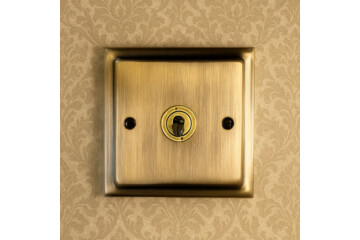
Light antique brass sits between polished and antique brass. It has more warmth than polished brass but is brighter and less heavy than standard antique brass. Think of it as the versatile middle ground.
Best for: Interiors where you want a golden tone without going too dark or too shiny. It works well in rooms with plenty of natural light, where a fully antique finish might feel a bit flat.
Pairs well with: Soft neutrals, warm creams, and natural oak tones. A good companion to pale wood furniture.
Satin Brass
 Satin Brass
Satin brass is one of the most popular finishes we sell — and no wonder. It has a smooth, brushed quality that's contemporary without being cold. The gold tone is still clearly there, but it's softer and less reflective than polished brass, making it much more versatile in modern homes.
Best for: Modern and transitional interiors. Open-plan living spaces, contemporary kitchens, and new-build properties where you want something with warmth but not too traditional a feel.
Pairs well with: Matt surfaces, handleless kitchen units, grey and greige tones, and darker painted cabinetry. It's a natural companion to other brushed metalwork like taps and door handles.
A good choice if: You're renovating a modern home but find chrome and nickel too cold. Satin brass brings warmth without the period connotations of antique brass.
Aged Brass
 Aged brass takes the antique aesthetic further — it has a darker, more complex tone that looks genuinely time-worn. It's a finish with real character, and works especially well in interiors that embrace a slightly imperfect, artisan quality.
Best for: Boutique-style interiors, dark and moody rooms, maximalist design, and homes with exposed brick or raw plaster. Also very popular in bars and restaurants for an upscale, atmospheric feel.
Pairs well with: Dark paint colours — especially deep blues, forest greens, and charcoal tones. Leather, velvet and other rich textures.
Worth knowing: Aged brass can look stunning in the right setting but can feel too heavy in bright, minimal spaces. It really comes into its own in rooms with a bold design identity.
Unlacquered Brass
 Unlacquered brass is in a category of its own. Unlike all our other brass finishes, it has no protective lacquer coating — which means it behaves differently over time, and that's entirely the point.
When first installed, unlacquered brass has a warm, bright golden tone. Over time, exposure to air and touch causes it to develop a natural patina — deepening in colour, picking up subtle variation, and taking on a character that's uniquely its own. No two sets of fittings will age in exactly the same way, depending on the light, the room, and how often they're touched.
Best for: Interiors where character and authenticity matter more than uniformity. It's particularly at home in arts and crafts, artisan, or rustic settings, and in rooms where you're deliberately embracing the idea that things improve with age.
Pairs well with: Natural materials — timber, stone, linen, leather. Heritage and hand-crafted interiors. Spaces that tell a story.
Worth knowing: Because unlacquered brass develops a patina naturally, it will look different in five years than it does on day one. If you prefer your fittings to stay consistent in appearance over time, one of our lacquered brass finishes will suit you better. But if you love the idea of fittings that genuinely evolve with your home, unlacquered brass is a beautiful choice.
Mixed Brass
 Our mixed brass range combines brass faceplates with contrasting metal inserts or highlights — typically pairing a brass plate with brushed steel or black detailing. It's a way of getting the warmth of brass while adding a contemporary edge.
Best for: Modern interiors where you want some interest and contrast. Kitchens and living areas where you're mixing metallic tones.
Pairs well with: Other mixed-metal interiors — for example, brass taps with steel handles, or black ironmongery alongside warm-toned metalwork.
A good choice if: You like brass but want something that feels a bit more current or unexpected.
Which Brass Finish Should I Choose?
Still not sure? Here's a simple way to think about it:
If your home is a period property — Victorian, Edwardian or Georgian — polished or antique brass is almost always a safe and beautiful choice. For something with a bit more character and a slightly less formal feel, aged brass is worth a look.
If you're in a more contemporary home but want warmth and a break from chrome, satin brass is probably your best starting point. It's the finish we recommend most often to people who are new to designer sockets.
If you love the idea of fittings that develop their own character over time, unlacquered brass is in a league of its own — just go in knowing that the patina is the feature, not a flaw.
If you're not sure whether a finish will work, remember that we have a 60-day no-quibble returns policy — so you can always try a piece in your room before committing to a full set.

A Note on Our British-Made Brass Ranges
All our ranges that carry the Made in Britain mark are made from solid metal — formed and hand-finished by skilled metalworkers here in the UK. If you're investing in quality fittings, it's worth knowing they've been made to last. We back them with a 10-year warranty as standard.
Frequently Asked Questions About Brass Sockets
Do brass sockets need special cleaning? A soft, dry cloth is usually enough for day-to-day cleaning. Avoid harsh chemical cleaners or abrasive cloths, which can dull or damage the lacquer finish over time. Our unlacquered brass range is the exception — being lacquer-free, it will develop a natural patina with use, which is very much part of its appeal.
Can I mix different brass finishes in the same room? You can, but it works best when it's intentional. Mixing antique brass and aged brass, for example, tends to look layered and considered. Mixing polished brass with satin brass can feel a bit inconsistent — it's generally better to pick one and commit.
Will brass sockets tarnish over time? Our lacquered brass finishes are treated to resist tarnishing under normal conditions. The exception is our Unlacquered Brass range, which is specifically designed to develop a natural patina over time — that living, evolving quality is what makes it special.
Do my sockets and switches need to match my other metalwork? Ideally yes, but they don't need to be identical. A similar tone (warm metals together, cool metals together) tends to look more considered than mixing warm and cool finishes in the same space.
How do I know which gang size I need? A single gang plate holds one socket or switch. A double gang holds two. We stock a full range of gang configurations — if you're not sure what you need, our customer service team is happy to help.
Browse our brass, or get in touch if you'd like advice on the right finish for your home.